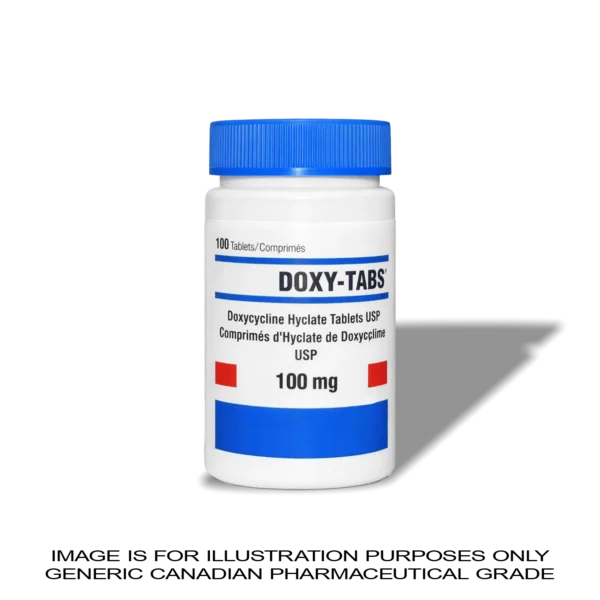
Doxycycline is a broad spectrum tetracycline class antibiotic used to treat a variety of infections caused by susceptible bacteria. Doxycycline 100mg tablets are available as prescription medications in Canada and are commonly supplied as doxycycline hyclate.
Doxycycline works by inhibiting bacterial protein synthesis. It binds to the 30S ribosomal subunit, preventing susceptible bacteria from producing proteins required for normal growth and replication. This gives doxycycline primarily bacteriostatic activity, meaning it stops susceptible bacteria from multiplying so the body’s immune system can more effectively clear the infection.
Doxycycline has activity against a broad range of Gram positive, Gram negative, and atypical organisms. Susceptible organisms can include species of Chlamydia, Mycoplasma, Rickettsia, Borrelia, Haemophilus, Streptococcus, and other bacteria depending on the infection and local resistance patterns.
Clinically, doxycycline may be used for certain respiratory tract infections, skin and soft tissue infections, sexually transmitted infections, tick borne illnesses, and other susceptible bacterial infections. It is also frequently prescribed in dermatology for moderate to severe inflammatory acne, where its antibacterial and anti inflammatory properties can help reduce inflammatory acne lesions.
Doxycycline is particularly well known for its activity against several atypical and intracellular bacteria, including Chlamydia trachomatis, Mycoplasma pneumoniae, and various Rickettsia species. It also has established activity against Borrelia species associated with tick borne disease.
This product provides:
- Active Ingredient: Doxycycline
- Common Form: Doxycycline Hyclate
- Strength: 100mg per tablet
- Quantity: 100 Tablets
- Drug Class: Tetracycline Antibiotic
- Dosage Form: Oral Tablet
- Common Uses: Susceptible bacterial infections and inflammatory acne
Health Canada’s Drug Product Database currently lists multiple doxycycline 100mg tablet products as marketed prescription medications in Canada, including doxycycline hyclate formulations.
As with other antibiotics, doxycycline should only be used for infections that are proven or strongly suspected to be caused by susceptible bacteria. Unnecessary antibiotic use contributes to antimicrobial resistance and may reduce the effectiveness of doxycycline and other antibiotics when they are genuinely needed. Cross resistance among tetracycline antibiotics can also occur.
Doxycycline can cause photosensitivity, making the skin more susceptible to sunburn during treatment. Patients may need to limit excessive sunlight and UV exposure and use appropriate sun protection while taking the medication.
Gastrointestinal effects such as nausea, abdominal discomfort, diarrhea, and irritation of the esophagus can also occur. Doxycycline tablets should be swallowed with adequate fluid, and appropriate administration instructions should be followed to reduce the risk of esophageal irritation.
Products containing calcium, magnesium, aluminum, iron, or certain other minerals can interfere with doxycycline absorption. This includes some antacids, mineral supplements, and other medications, so potential interactions should be reviewed with a healthcare professional.
Like other tetracycline class antibiotics, doxycycline has important precautions regarding pregnancy and tooth development in young children, as tetracyclines can affect developing teeth and bones. The risks and benefits depend on the infection and individual clinical circumstances.
Doxycycline has also been associated with intracranial hypertension, a rare increase in pressure around the brain that can cause headache and visual symptoms. Concurrent use with systemic retinoids such as isotretinoin is generally avoided because both drug classes have been associated with this condition.
Doxycycline is a prescription antibiotic and should be taken according to the directions of a qualified healthcare professional. The prescribed course should not be changed or discontinued without appropriate medical guidance.