

Introduction
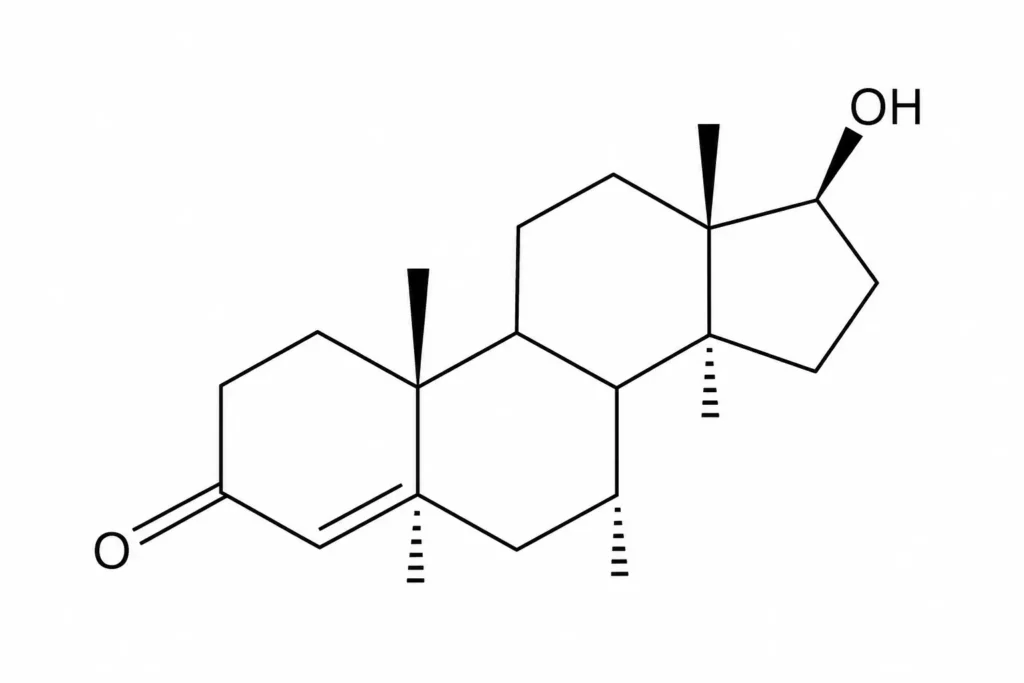
What are Testosterone Esters?
Testosterone esters are chemical modifications of the testosterone molecule in which a carboxylic acid is bonded to the 17-beta hydroxyl group of testosterone. This esterification process alters the compound’s solubility and release characteristics, allowing researchers to study testosterone’s physiological effects across varying time windows and release profiles.
In their esterified form, testosterone compounds are oil soluble rather than water soluble, making them suitable for injectable preparations suspended in carrier oils. The ester attached to the testosterone molecule is gradually cleaved by esterase enzymes following administration, releasing free testosterone into the surrounding tissue. The length of the ester chain is the primary determinant of how quickly or slowly this process occurs.
Importance of Testosterone in the Body
Testosterone is an endogenous androgenic hormone produced primarily in the testes in males and in smaller quantities in the adrenal glands and ovaries. It plays a foundational role in a broad range of physiological processes including muscle protein synthesis, bone mineral density, red blood cell production, fat distribution, and reproductive function.
In research contexts, testosterone and its esterified derivatives are studied extensively for their effects on hormonal regulation, body composition, metabolic function, and endocrine system interactions. The availability of multiple ester variants allows researchers to design protocols with precise control over release timing and active duration.
Different Types of Testosterone Esters
Testosterone Cypionate
Testosterone Cypionate is one of the most widely studied long acting testosterone esters. It features an 8-carbon ester chain, which produces a slow, sustained release profile following intramuscular administration. With a half-life of approximately 8 days, Testosterone Cypionate remains active in tissue for an extended period, making it a common reference compound in studies examining long term androgenic effects.
Its relatively stable release curve and well documented pharmacokinetic profile have made Testosterone Cypionate a foundational compound in anabolic and endocrinological research.
Testosterone Enanthate
Testosterone Enanthate carries a 7-carbon ester chain, producing pharmacokinetic characteristics very similar to Testosterone Cypionate. Its half-life is approximately 7 days, and its release profile is marginally faster than Cypionate due to the slightly shorter ester chain.
In research, Testosterone Enanthate and Testosterone Cypionate are frequently studied comparatively given their near identical profiles. The minor structural difference between the two provides researchers with a useful model for examining how subtle ester chain variations influence release kinetics and bioavailability.
Testosterone Propionate
Testosterone Propionate is a short acting ester with a 3-carbon chain and a half life of approximately 2 to 3 days. Its rapid onset and shorter active window make it a distinct research tool compared to the longer acting esters. Studies requiring frequent sampling intervals or shorter active periods often reference Propionate due to its accelerated clearance characteristics.
The faster release profile of Testosterone Propionate also makes it a useful compound for examining acute androgenic responses and short duration hormonal interventions in research models.
Testosterone Decanoate
Testosterone Decanoate features the longest ester chain of the commonly studied testosterone variants, with 10 carbons producing a half-life of approximately 15 days. This extended release profile makes it the slowest acting of the four primary esters and is most commonly encountered as a component of multi ester blends in research preparations.
Its prolonged active window has made Testosterone Decanoate a subject of interest in research examining sustained androgenic exposure and its long term effects on various physiological markers.
Anabolic Steroids and Testosterone Esters
The Role of Testosterone Esters in Anabolic Research
Testosterone esters occupy a central position in anabolic steroid research due to testosterone’s status as the primary endogenous androgen and the structural basis from which most synthetic anabolic androgenic steroids are derived. Understanding how esterification modifies testosterone’s behavior in biological systems is foundational to broader research into anabolic compounds and their mechanisms of action.
Researchers studying muscle protein synthesis, nitrogen retention, IGF-1 regulation, and androgenic receptor binding frequently utilise testosterone esters as reference compounds or as primary subjects of investigation. The range of available ester variants provides considerable flexibility in experimental design.
Common Esters Used in Research Protocols
Among the testosterone esters available for research purposes, Testosterone Cypionate and Testosterone Enanthate are the most frequently referenced in the literature due to their stable, predictable release profiles and extensive documentation. Testosterone Propionate is commonly selected for shorter duration studies or protocols requiring more frequent intervention points. Testosterone Decanoate appears most often in research involving sustained androgenic exposure or as part of combination preparations.
The selection of a specific ester in a research protocol is driven primarily by the desired active duration, sampling frequency, and the specific physiological endpoints being measured.
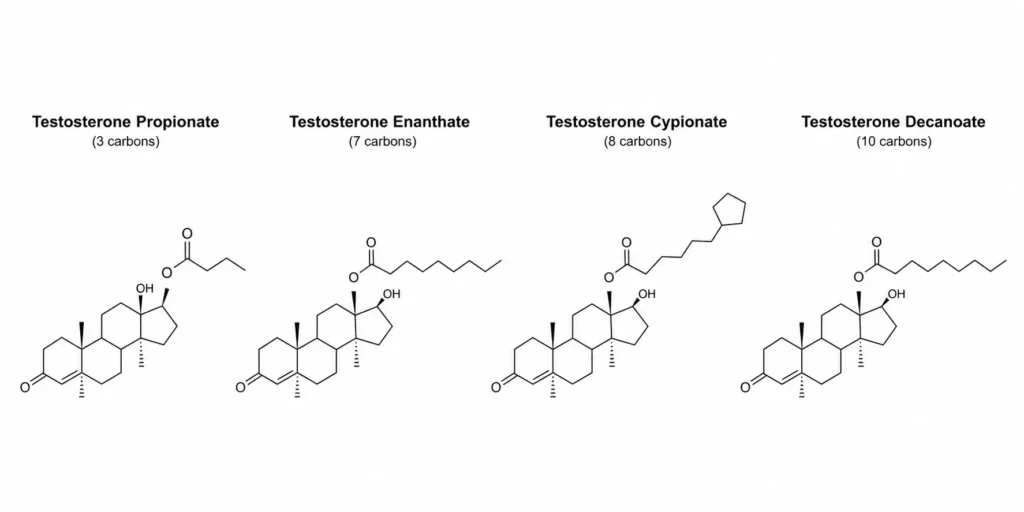
Ester Half-Life and Release Rates
What is a Half-Life?
In pharmacokinetics, half-life refers to the time required for the concentration of a compound in biological tissue to reduce by 50%. For esterified testosterone compounds, the half-life reflects the rate at which esterase enzymes cleave the ester bond and release free testosterone into circulation.
Understanding half-life is essential in research design as it directly informs dosing intervals, washout periods, and the interpretation of time course data in studies examining hormonal fluctuations.
Testosterone Cypionate Half-Life
Approximately 8 days. Cypionate’s long half-life produces a gradual peak followed by a slow decline, resulting in relatively stable free testosterone levels over the active period.
Testosterone Enanthate Half-Life
Approximately 7 days. Enanthate’s release curve closely mirrors Cypionate, with a marginally faster initial release due to the shorter ester chain. The practical difference between the two in research settings is minimal.
Testosterone Propionate Half-Life
Approximately 2 to 3 days. Propionate’s short half-life produces a sharper peak and faster clearance, requiring more frequent administration intervals to maintain consistent tissue concentrations in research protocols.
Testosterone Decanoate Half-Life
Approximately 15 days. Decanoate’s extended half-life produces the most prolonged release curve of the primary testosterone esters, with free testosterone levels remaining elevated for an extended period following a single administration.
Comparative Release Rate Chart
| Ester | Ester Chain | Half-Life | Release Speed |
|---|---|---|---|
| Testosterone Propionate | 3 carbons | ~2–3 days | Fast |
| Testosterone Enanthate | 7 carbons | ~7 days | Moderate–Slow |
| Testosterone Cypionate | 8 carbons | ~8 days | Slow |
| Testosterone Decanoate | 10 carbons | ~15 days | Very Slow |
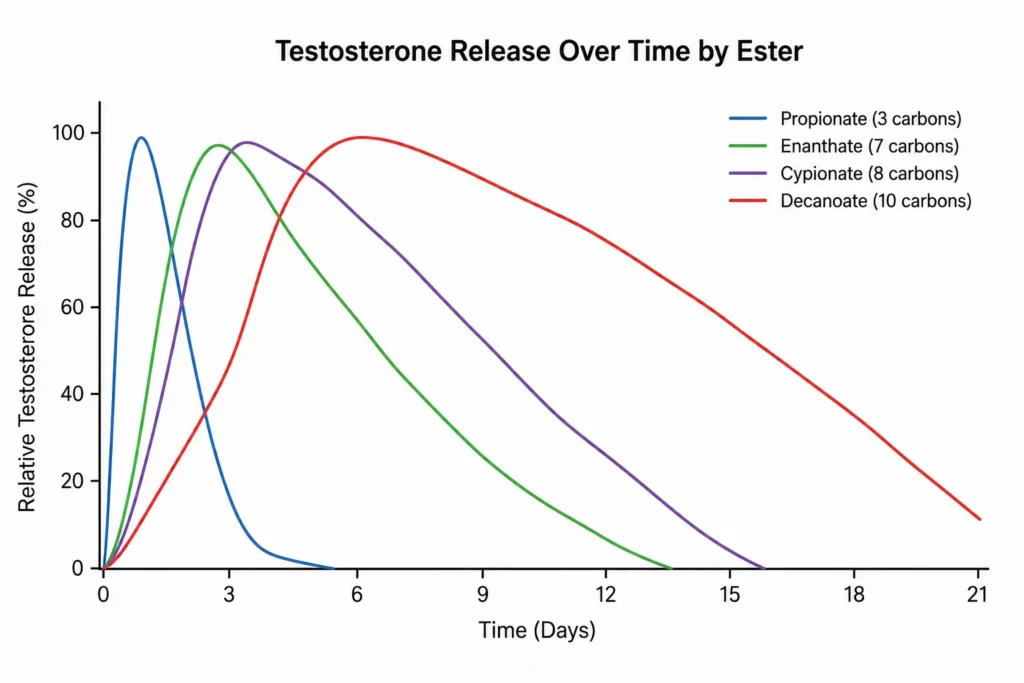
How Ester Length Affects Release
The relationship between ester chain length and release rate is a direct one; longer carbon chains increase the lipophilicity of the compound, slowing the rate of esterase mediated hydrolysis and extending the active life of the molecule in tissue. Shorter chains reduce lipophilicity, accelerating hydrolysis and producing faster acting compounds with shorter windows of activity.
This principle underpins the selection of specific esters in research design and explains why the same base molecule; testosterone can exhibit markedly different pharmacokinetic behavior depending solely on the ester attached to it.
Injectable Testosterone Esters in Research
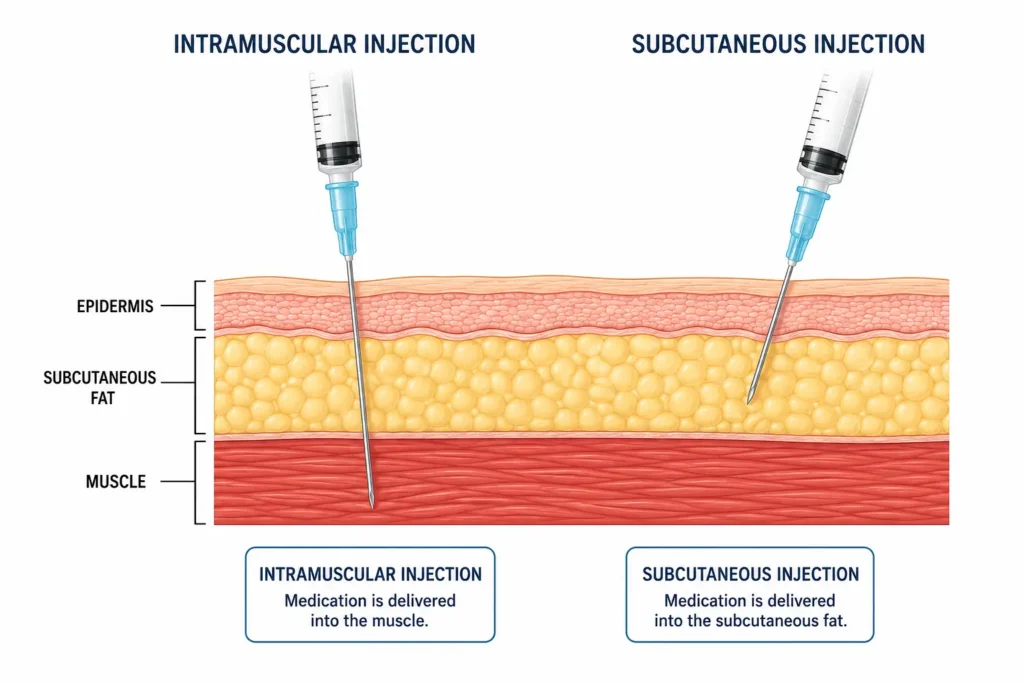
Intramuscular vs Subcutaneous Administration
Injectable testosterone esters are most commonly administered intramuscularly in research contexts, with the gluteal, deltoid, and vastus lateralis muscles being standard injection sites referenced in the literature. Intramuscular administration into well vascularized muscle tissue facilitates the gradual diffusion of the oil based preparation and the sustained release of free testosterone as the ester is cleaved.
Subcutaneous administration has also been studied as an alternative route, with research suggesting comparable bioavailability for certain esters at appropriate volumes. The subcutaneous route deposits the preparation into adipose tissue beneath the skin, producing a slightly different absorption dynamic that has been the subject of comparative pharmacokinetic studies.
Oil Based Carrier Solvents
Esterified testosterone compounds are suspended in carrier oils for injectable preparation due to their oil soluble nature. Common carrier oils documented in the research literature include sesame oil, grapeseed oil, cottonseed oil, and medium chain triglyceride (MCT) oil. The choice of carrier influences the viscosity of the preparation, the rate of diffusion from the injection site, and in some cases the tolerability of the compound in biological tissue.
Benzyl alcohol and benzyl benzoate are commonly used as solvents and preservatives in research grade injectable preparations, serving to maintain compound solubility at higher concentrations and extend shelf stability.
Stability and Storage Considerations
Research grade injectable testosterone preparations are generally stable at room temperature when stored away from direct light and heat. Exposure to temperature extremes or UV light can accelerate degradation of both the ester compound and the carrier oil. Crystallization may occur in some preparations at low temperatures, though this is typically reversible upon gentle warming.
For research purposes, maintaining compound integrity through appropriate storage conditions is essential to ensuring experimental reproducibility and accurate interpretation of results.
Conclusion
Recap of Key Points
Testosterone esters are esterified derivatives of testosterone that differ primarily in their ester chain length, which directly determines their release rate and half-life. The four primary esters; Cypionate, Enanthate, Propionate, and Decanoate span a range from fast acting (Propionate, ~2–3 days) to very slow acting (Decanoate, ~15 days), giving researchers precise control over active duration and release kinetics in experimental design.
Injectable preparations utilize oil based carrier solvents, with intramuscular administration being the most documented route. Proper storage and compound integrity are foundational considerations for any research protocol involving these compounds.
Final Thoughts on Testosterone Esters
The breadth of available testosterone ester variants reflects the compound’s central importance in endocrinological and anabolic research. For researchers sourcing testosterone esters for laboratory and analytical applications, understanding the pharmacokinetic distinctions between ester variants is essential to designing protocols that yield reliable, reproducible results. Canada Steroid Depot offers a range of research grade testosterone ester compounds including Testosterone Cypionate, Testosterone Enanthate, and Testosterone Propionate for legitimate research and analytical purposes.
What is the most commonly used testosterone ester in research?
Testosterone Cypionate and Testosterone Enanthate are the most frequently referenced esters in anabolic and endocrinological research literature. Both offer stable, well documented pharmacokinetic profiles with half-lives of approximately 8 and 7 days respectively, making them reliable reference compounds for studies examining long-term androgenic effects on hormonal regulation, body composition, and metabolic function.
What is the difference between Testosterone Cypionate and Testosterone Enanthate?
The primary difference between Testosterone Cypionate and Testosterone Enanthate is their ester chain length; Cypionate carries an 8-carbon chain while Enanthate carries a 7-carbon chain. This produces marginally different half-lives of approximately 8 days and 7 days respectively. In practical research terms the two esters are nearly identical in their release profiles and are frequently used interchangeably in study protocols.
Which testosterone ester has the longest half-life?
Testosterone Decanoate has the longest half-life of the commonly studied testosterone esters at approximately 15 days. Its 10-carbon ester chain produces the slowest release rate and most prolonged active window, making it the preferred ester in research protocols requiring sustained androgenic exposure over extended periods.
What carrier oils are used in injectable testosterone preparations?
Injectable testosterone ester preparations are commonly suspended in carrier oils including sesame oil, grapeseed oil, cottonseed oil, and medium chain triglyceride (MCT) oil. The carrier oil influences the viscosity, diffusion rate, and stability of the preparation. Benzyl alcohol and benzyl benzoate are typically included as solvents and preservatives to maintain compound solubility and extend shelf life.
What does ester chain length determine in testosterone compounds?
Ester chain length directly determines the release rate and half-life of a testosterone compound. Longer carbon chains increase the lipophilicity of the molecule, slowing esterase mediated hydrolysis and extending the active window. Shorter chains reduce lipophilicity, producing faster acting compounds with quicker clearance. This relationship between ester chain length and pharmacokinetic behavior is foundational to research design involving esterified testosterone compounds.