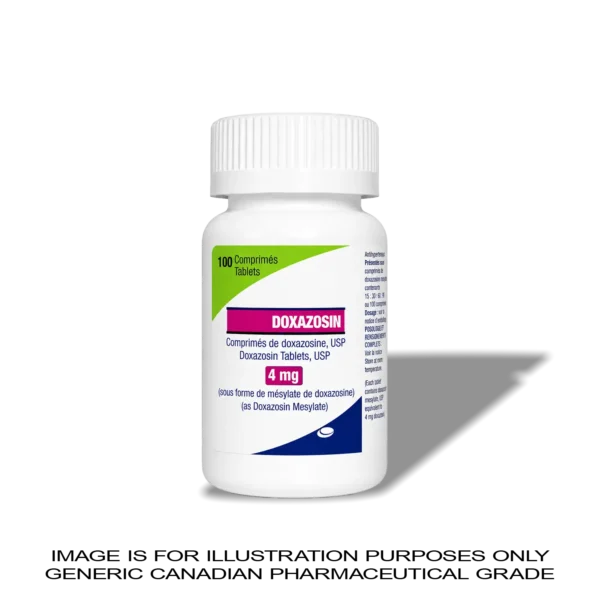
Doxazosin is a prescription alpha 1 adrenergic receptor blocker used for the treatment of hypertension and the signs and symptoms of benign prostatic hyperplasia (BPH). Health Canada currently lists multiple marketed doxazosin 4mg tablet products as prescription medications in Canada.
Doxazosin works by selectively blocking postsynaptic alpha 1 adrenergic receptors. These receptors normally respond to norepinephrine and promote contraction of smooth muscle in blood vessels and other tissues. Blocking alpha 1 signaling relaxes vascular smooth muscle, reducing peripheral vascular resistance and helping lower blood pressure.
In patients with benign prostatic hyperplasia, alpha 1 receptors are present in smooth muscle within the prostate and bladder neck. Doxazosin relaxes these tissues, helping improve urinary flow and reduce BPH related symptoms such as difficulty starting urination, weak urine stream, incomplete bladder emptying, and frequent or urgent urination.
Unlike medications such as finasteride or dutasteride, doxazosin does not primarily reduce prostate size or suppress DHT production. Its effect on BPH symptoms results from smooth muscle relaxation, so it works through a different mechanism than 5 alpha reductase inhibitors.
For hypertension, doxazosin’s vasodilating effects help reduce blood pressure and cardiovascular workload. Lowering persistently elevated blood pressure is an important part of reducing long term cardiovascular risks such as stroke and myocardial infarction.
This product provides:
- Active Ingredient: Doxazosin
- Common Form: Doxazosin Mesylate
- Strength: 4mg per tablet
- Quantity: 100 Tablets
- Drug Class: Alpha 1 Adrenergic Receptor Blocker
- Dosage Form: Oral Tablet
- Common Uses: Hypertension and benign prostatic hyperplasia (BPH)
Doxazosin is available in several tablet strengths, including 1mg, 2mg, 4mg and 8mg. Treatment is generally initiated at a lower strength and adjusted according to clinical response because alpha blockers can produce significant reductions in blood pressure, particularly when therapy is first started or the dose is increased.
One of the most important precautions associated with doxazosin is postural or orthostatic hypotension. Patients may experience dizziness, light headedness, weakness, or fainting when standing, particularly during the early stages of treatment or following dosage increases.
Other potential adverse effects can include fatigue, headache, dizziness, swelling, drowsiness, and low blood pressure. Additional caution may be required when doxazosin is combined with other medications that lower blood pressure.
Doxazosin is also associated with intraoperative floppy iris syndrome (IFIS) during cataract surgery. Patients who currently take or have previously taken alpha 1 blockers should inform their ophthalmologist before undergoing cataract surgery.
Because urinary symptoms associated with BPH can overlap with those caused by other prostate conditions, appropriate medical evaluation is important before and during treatment. Doxazosin is a prescription medication and should be used according to the directions of a qualified healthcare professional.