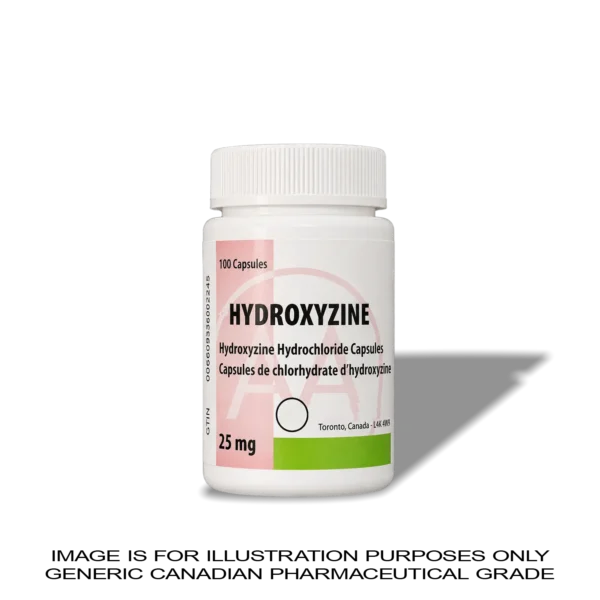
Hydroxyzine is a first generation antihistamine with antihistaminic, sedative, and anxiolytic properties. Hydroxyzine hydrochloride 25mg tablets are used for the symptomatic relief of anxiety and tension, as well as itching associated with allergic conditions such as chronic urticaria, atopic dermatitis, and contact dermatitis.
Its primary antihistamine activity results from blocking histamine H1 receptors, reducing the effects of histamine involved in itching, redness, and other allergic symptoms. Unlike newer non sedating antihistamines, hydroxyzine readily produces central nervous system effects, which contribute to its characteristic calming and sedating properties.
Hydroxyzine also suppresses activity within certain areas of the central nervous system, contributing to its use for short term anxiety relief and sedation. Following oral administration, its clinical effects can generally begin within approximately 15 to 30 minutes.
In allergic conditions, hydroxyzine can help reduce itching and histamine mediated symptoms associated with conditions such as chronic hives and inflammatory skin disorders. Its sedating properties can also be useful when itching interferes with sleep, although daytime drowsiness can occur.
This product provides:
- Active Ingredient: Hydroxyzine Hydrochloride
- Strength: 25mg per tablet
- Quantity: 100 Tablets
- Drug Class: First Generation Antihistamine
- Dosage Form: Oral Tablet
- Common Uses: Anxiety, Itching, Hives and Allergic Skin Conditions
Hydroxyzine can cause drowsiness, dizziness, dry mouth, and reduced alertness. Patients should understand how the medication affects them before driving or operating machinery. Alcohol and other central nervous system depressants can increase its sedating effects.
An important safety consideration is hydroxyzine’s potential effect on cardiac electrical activity. Post marketing cases of QT prolongation and torsade’s de pointes have been reported, particularly in individuals with other risk factors such as existing heart disease, electrolyte abnormalities, or concurrent use of medications that also prolong the QT interval. Hydroxyzine is contraindicated in patients with a known prolonged QT interval.
Hydroxyzine also has mild anticholinergic effects, which can contribute to dry mouth and may be more significant in older adults. Sedating medications can cause increased confusion or excessive sedation in elderly patients, so additional caution may be required in this population.
The effectiveness of hydroxyzine as an anti anxiety medication for continuous use beyond four months has not been systematically evaluated, so longer term treatment should be periodically reassessed by a healthcare professional.
Hydroxyzine should be used according to the directions of a qualified healthcare professional, particularly in patients with cardiovascular conditions or those taking other sedating or QT prolonging medications.